THE ORIGINS OF THE NAME QIMG MING
The term “Qing Ming” (清明) translates to “Clear Brightness” or “Pure Brightness” in English. It refers to the weather condition typically experienced during this time of the year in China, marked by clear and bright skies as spring begins to fully unfold.
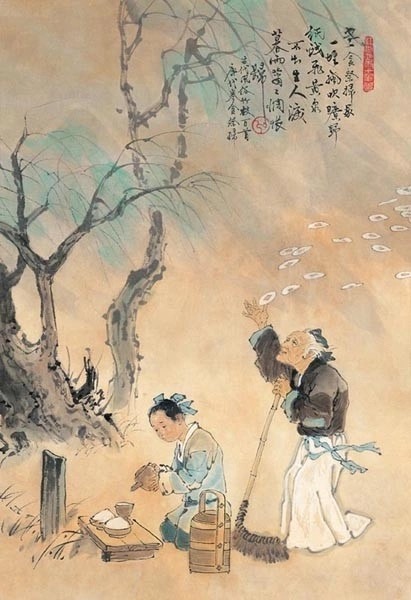
The name “Qing Ming” originates from ancient Chinese literature, particularly from the “Book of Songs” (《诗经》), a collection of ancient Chinese poetry dating back to the Zhou dynasty (1046–256 BCE). In one of the poems, there is a verse that reads: “清明时节雨纷纷,路上行人欲断魂”, which roughly translates to “In the season of Clear Brightness, the rain falls endlessly; travellers on the road feel their souls torn apart.”
This verse reflects the melancholy and reflective mood often associated with the Qing Ming period, as it coincides with the arrival of spring and the awakening of nature after the cold winter months. Also a remembrance day of our dearly departed.
The name Qing Ming thus captures the essence of this transitional period, marked by both clarity and brightness, as well as the contemplation of life and mortality.
Master Boon🌈💜
THE HISTORY
The story of Qingming starts a couple thousand years ago in what is now Shanxi Province. A prince named Chong’er was exiled, and the nobleman Jie Zhitui followed him and continued to serve him. Jie Zhitui was immensely faithful to his master during this time of hardship, with some legends saying that he even cut pieces of his own flesh to feed Chong’er when there were no other options. Eventually, an invading force installed Chong’er as the duke of the area he had once been exiled from
When this happened, Chong’er was said to have been very generous to those who had remained loyal to him in exile. However (and accounts differ on this), Jie Zhitui either was passed over by his lord, or he refused to accept any reward for his behavior, on principle. Either way, he went into hermitage in the forest. In the most common telling of this story, Chong’er eventually realized his mistake of not honoring Jie Zhitui and, having been unsuccessful at locating him within the forest, decided to burn the forest down and force Jie Zhitui out. The forest fire ended up killing Jie Zhitui instead.
Distraught over this turn of events, Chong’er honored his fallen ward with the establishment of the Hanshi Festival (among other elaborate memorials). This festival proved popular, but somewhat dangerous, mostly due to a common tradition of not lighting fires for a month, which adversely affected children and the elderly. For centuries, Chinese government officials tried to ban or alter certain traditions but were unsuccessful. It wasn’t until the Tang Dynasty, when Emperor Xuanzong combined Hanshi with the Shangsi Festival to create the one-day Qingming Festival.